↓
 

Gulf Shores Land Surveying

Local Land Surveyors in Gulf Shores, AL

Gulf Shores Land Surveying
  • Home
  • ALTA Survey
  • Boundary Surveying
  • Construction Survey
  • Drone LiDAR Mapping
  • Elevation Certificate
  • Land Surveying
  • Topographic Survey
  • Blog
  • Contact Us
Home 1 2 3 … 7 8 >>

Post navigation

← Older posts

Welcome to Gulf Shores Land Surveying

Gulf Shores Land Surveying Posted on August 18, 2017 by GulfShoresSurveyorJuly 19, 2022

Your Final Stop for ALL of Your Survey Needs!  Contact us today for a free quote!

This site is intended to provide you with information on Land Surveying in the Gulf Shores, AL and Baldwin County area of Alabama. If you’re looking for a Gulf Shores Land Surveyor, you’ve come to the right place. If you’d rather talk to someone about your land surveying needs, please call our local number at (251) 501-2495 today. For more information, please continue to read.

land surveyingLand Surveyors are professionals who make precise measurements to determine the size and boundaries of a piece of real estate.  While this is a simplistic definition, boundary surveying is one of the most common types of surveying related to home and land owners. If you fall into the following categories, please click on the appropriate link for more information on that subject:

Gulf Shores Land Surveying services:

    1. I need to know where my property corners or property lines are. (Boundary Survey)
    2. I have a loan closing or re-finance coming up on my home in a subdivision. (Lot Survey)
    3. I need a alp of my property with contour lines to show elevation differences for my architect or engineer. (Topo Survey)
    4. I’ve just been told I’m in a flood zone or I’ve been told I need an elevation certificate in order to obtain flood insurance or prove I don’t need it. (Flood Survey)
    5. I’m purchasing a lot/house in a recorded subdivision. (Lot Survey – See Boundary Survey if you’re not in a subdivision.)
    6. I’m purchasing a larger tract of land, acreage, that hasn’t been subdivided in the past. (Boundary Survey)

Contact Gulf Shores Land Surveying services TODAY at (251) 501-2495.

Posted in boundary surveying, elevation certificate, land surveying, land surveyor | Tagged boundary survey, Gulf Shores Land Surveying, land surveyor, land surveyor al

Shoreline Changes Can Make Property Boundaries Less Obvious, Which Is Where Land Surveying Helps

Gulf Shores Land Surveying Posted on June 23, 2026 by GulfShoresSurveyorJune 21, 2026
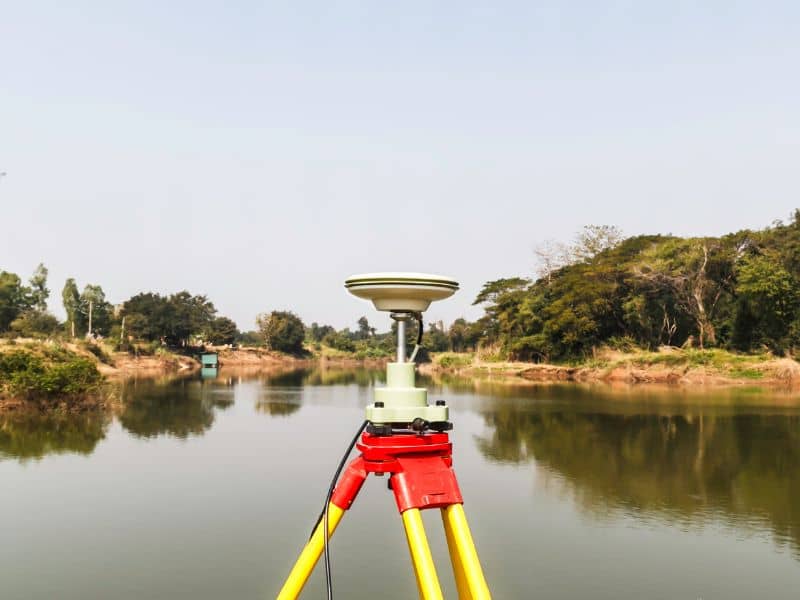
Surveying equipment positioned along a shoreline to establish accurate waterfront property boundaries

A boundary survey on most inland properties confirms something that rarely changes. The fence is still the fence. The tree line still sits roughly where it was twenty years ago. Waterfront property doesn’t offer that same stability. The shoreline itself moves, sometimes a little each year and sometimes all at once during a single storm. That movement can quietly separate what a property looks like from what its legal boundary actually says.

This creates a strange problem for waterfront owners. The landmarks people naturally rely on, a fence, a row of trees, a stretch of beach, can shift without anyone touching them. The boundary line on paper hasn’t moved at all. The land around it has.

Coastal Erosion and Storm Events Can Alter Familiar Property Landmarks

Wind and waves work on a shoreline constantly, even on calm days. Most of the time the change is too slow to notice. A few inches of sand disappear here. A little vegetation creeps in there. Over the course of a normal year, nothing looks dramatically different. Add a hurricane or a major storm surge, and years of gradual change can happen in a single afternoon.

This kind of erosion doesn’t just reshape the beach. It reshapes the landmarks property owners use to mentally track where their land begins and ends. A fence line that used to sit comfortably inland might end up close to the water’s edge after a few seasons of erosion. Vegetation that once marked a clear boundary between properties can wash away entirely, leaving nothing where a visual reference used to be.

The tricky part is that none of this changes the actual legal boundary. A property line described in a deed doesn’t move just because the shoreline in front of it does. What changes is how well the visible landscape still matches that legal description. After a few storms, a property owner standing on their land might be looking at a completely different picture than the one their grandparents used to navigate decades earlier.

Why Waterfront Property Owners Should Not Rely on Old Visual References

Seawalls, docks, and retaining structures feel permanent. They’re built from concrete, wood, and steel, and they look like they belong exactly where they sit. But waterfront infrastructure gets repaired, replaced, and rebuilt more often than people expect. Each version doesn’t always end up in the exact same spot as the one before it.

A seawall replaced after storm damage might be rebuilt a few feet from where the original stood. New construction often follows updated engineering rules rather than the old footprint. A dock rebuilt after years of wear might shift slightly to account for new water depths or a different boat. None of these changes get announced to the neighbors. They just happen, gradually, project by project, until the structure everyone used as an informal boundary marker sits somewhere slightly different than it once did.

Landscaping adds another layer of drift. A hedge planted along what someone assumed was the property line might have been planted a few feet off from the start. Years of growth and trimming can shift its apparent edge even further. None of these gradual changes are dramatic on their own, but they add up. A property owner who trusts these old visual references can end up making bad decisions. Checking the actual recorded boundary matters more than trusting a line that was never quite right to begin with.

Land Surveying Provides Accurate Boundary Information Along Changing Shorelines

This is exactly the kind of uncertainty land surveying exists to resolve. A professional survey doesn’t rely on what a fence or seawall currently looks like. It works from the legal description recorded for the property. It cross references historical survey records when they exist. It takes precise field measurements that establish exactly where the boundary sits today, no matter what the surrounding landscape has done in the meantime.

Coastal properties often involve legal concepts that don’t come up on inland parcels at all. Some waterfront boundaries are tied to natural features, like the mean high water line, rather than a fixed point. A surveyor working a shoreline property knows how to apply these rules correctly. They translate a legal description that might reference natural, shifting features into an exact, measurable boundary on the ground as it exists right now.

This precision matters because visual estimates simply aren’t reliable on shoreline property the way they might be elsewhere. A measurement-based approach removes the guesswork. It replaces a boundary based on a fence that may have drifted, a dock that’s been rebuilt, or a tree line reshaped by years of wind and water.

Property Improvements Near the Water Benefit From Verified Boundary Locations

Anyone planning a dock, a walkway, a new seawall, a patio, or an addition near the water benefits from one thing above all. Knowing exactly where their property begins and ends before construction starts. Building too close to a boundary, or worse, partially across it, creates problems. These can range from awkward conversations with a neighbor to genuine legal disputes that cost far more than a survey would have.

A few specific situations make this verification especially valuable:

  • A new dock or walkway planned near a boundary shared with a neighboring waterfront property
  • A seawall or retaining structure that needs rebuilding in the correct location after storm damage
  • An addition or patio planned close enough to the water that setback rules and boundary lines both come into play

Verified boundary information gives property owners and their contractors a clear, confirmed starting point before any of this work begins. Skipping that step and building based on assumption is one of the more common ways waterfront improvements end up needing costly rework.

Real Estate Transactions Are Easier When Coastal Boundaries Are Clearly Defined

Waterfront property transactions move more smoothly when boundary lines are clearly established rather than left as an open question. Buyers want confidence that the property they’re purchasing matches its legal description. Lenders want the same confidence before approving financing tied to that property as collateral. Attorneys handling the transaction need accurate boundary information to address any title questions that come up along the way.

Clear boundary information also helps prevent disputes that might otherwise surface after closing. A new owner starts making improvements, or discovers a neighbor disagrees about where the line actually falls. A survey completed before the transaction closes gives everyone involved the same accurate picture to work from. That includes the buyer, the seller, the lender, and the attorneys.

This matters more on coastal property than almost anywhere else, simply because the landscape itself is less stable. A clearly defined boundary, confirmed through proper land surveying rather than assumed from visible landmarks, gives everyone in the transaction confidence. What they’re buying, selling, or financing actually matches what the records say.

Frequently Asked Questions

Why can shoreline properties have less obvious boundary lines? 

Erosion, storms, changing vegetation, and new improvements can make visual landmarks less reliable over time.

How does land surveying help with coastal properties? 

Land surveying uses measurements and legal records to establish accurate boundary locations, even when the landscape has changed.

Can old fences or seawalls indicate the true property line? 

Not necessarily. Visible improvements do not always coincide with legal boundary lines.

When should a waterfront property owner consider a survey? 

A survey is beneficial before building improvements, buying or selling property, or addressing boundary questions.

Who benefits from land surveying on shoreline properties? 

Homeowners, buyers, sellers, developers, attorneys, lenders, and commercial property owners all benefit from accurate boundary information.

Posted in boundary surveying, land surveying | Tagged Land Surveying

Do You Need a Land Survey to Refinance Your Home?

Gulf Shores Land Surveying Posted on June 3, 2026 by GulfShoresSurveyorMay 26, 2026
Homeowner reviewing refinance paperwork with a property survey and home documents at the kitchen table

Whether you need a land survey to refinance your home depends on your lender, your title company, and whether anything on your property has changed since the last survey. Some lenders require a new survey. Others will accept an older one if you sign a statement saying nothing has changed. In some cases, a survey may not be required at all. The best first step is to ask your lender and title company directly.

Why Refinancing Brings Up the Survey Question

When you refinance your home, you are taking out a new loan. Your lender needs to make sure the property they are lending against is exactly what they think it is. That means confirming your home is properly placed on the lot, that no one has built onto your land without permission, and that there are no issues that could affect the value of their investment.

A land survey is one way lenders and title companies verify these things. But the rules are not the same for everyone. Your lender may handle it differently than your neighbor’s lender did. Your state may have different rules than the state next door. This article explains the most common situations so you know what to expect before you start the refinancing process.

What Your Lender Might Say

When you ask your lender if you need a survey, you might hear one of three responses.

“Yes, we require a new survey.” Some lenders require a current survey as part of their standard refinancing checklist. This is more common with larger loans, properties on large lots, or properties in areas where boundary disputes are frequent.

“We don’t require a survey.” This sounds like good news, but it does not always mean you are off the hook. Even if your lender does not ask for a survey directly, your title company likely still needs one to issue a clean title insurance policy. More on this below.

“We will accept your existing survey.” If you already have a survey on file, some lenders and title companies will accept it as long as it is not too old and nothing on the property has changed. How old is too old depends on the lender and the state, but many title companies will accept a residential survey that is no more than six years old when paired with a signed affidavit from the homeowner.

The Title Insurance Connection

Here is something many homeowners do not realize: even when a lender says a survey is not required, title insurance usually is. And title insurance has its own rules about surveys.

When a title company issues a policy, they include something called a survey exception. This is a line in the policy that says the title company will not cover any problems that a survey would have revealed. That exception protects the title company, but it leaves you with a gap in your coverage.

To remove that exception, the title company typically needs a current survey showing there are no problems with your property lines or structures. If you cannot provide one, the survey exception stays in the policy. That means if a boundary issue comes up later, you may not be covered.

This is why getting a survey during a refinance can protect you even when it is not technically required by your lender.

When You Can Use Your Existing Survey

You may be able to use the survey you already have. This is called reusing or recertifying an existing survey. It is faster and less expensive than ordering a brand new one.

Your existing survey may be accepted if:

  • It was done recently, typically within the past few years
  • Nothing on the property has changed since it was completed
  • Your lender and title company both agree to accept it

To use an older survey, your title company may ask you to sign a survey affidavit. This is a short written statement saying that, to the best of your knowledge, no improvements have been made to the property since the date of the last survey. No new buildings, no additions, no new fences or structures of any kind.

Signing this affidavit allows the title company to treat the old survey as if it is still current. It is a simple step, but it carries legal weight. Only sign it if it is accurate.

When You Will Need a New Survey

There are situations where a new survey is almost always required, regardless of what your lender says.

You have made changes to the property. If you added a room, built a garage, put up a fence, installed a pool, or made any other structural change since your last survey, the old survey no longer reflects reality. A new one is needed.

Your existing survey is too old. If your survey is more than six years old, many title companies will not accept it even with an affidavit. Some have stricter cutoffs. Check with your title company to confirm their policy.

Your lender specifically requires a current survey. If your lender’s checklist includes a survey, there is no way around it. You will need to order one before the refinance can close.

There are known boundary concerns. If there is any history of disputes with neighbors, questions about property lines, or changes to adjacent properties, a fresh survey gives everyone involved a clean, current document to work from.

A Simple Way to Find Out What You Need

Before you spend any time worrying about whether you need a survey, take two quick steps.

First, ask your lender directly. Find out whether their checklist requires a survey and, if so, what type and how recent it needs to be.

Second, ask your title company the same question. Ask them specifically whether they need a survey to remove the survey exception from your title insurance policy, and whether your existing survey would qualify.

These two conversations will give you a clear answer in a matter of minutes. From there, a licensed land surveyor can help you figure out whether your existing survey can be used or whether a new one needs to be ordered.

Frequently Asked Questions

Can I refinance without a survey? 

In some cases, yes. If your lender does not require one and your title company accepts an affidavit in place of a survey, you may be able to close without ordering a new one. However, skipping a survey can leave a gap in your title insurance coverage.

What is a survey affidavit? 

A survey affidavit is a signed statement from the homeowner saying that no improvements have been made to the property since the last survey was completed. Title companies use it to extend coverage based on an older survey. It only works if the statement is accurate.

How old can my survey be for a refinance? 

Most title companies will accept a residential survey that is no more than six years old, provided you sign a no-change affidavit. Some companies have stricter policies. Check with your specific title company before assuming your old survey will qualify.

Does refinancing a commercial property require a new survey? 

Usually, yes. Commercial refinances typically require a current ALTA survey. Some title companies will accept an existing ALTA survey if no changes have been made and the survey meets their recency requirements, but this is decided on a case-by-case basis.
Posted in land surveying | Tagged land surveying

What Is an ALTA Survey?

Gulf Shores Land Surveying Posted on June 2, 2026 by GulfShoresSurveyorMay 25, 2026
Land surveyor reviewing a commercial property site with boundary lines and easement details for an ALTA survey

An ALTA survey is a detailed land survey that follows national rules set by two organizations: the American Land Title Association (ALTA) and the National Society of Professional Surveyors (NSPS). It is accepted in all 50 states. Most commercial real estate deals require one. It covers property lines, buildings on the land, easements, utilities, and other details that lenders and title companies need before they approve a deal.

The Survey Built for Big Property Deals

Buying a home is different from buying a shopping center or an office building. A home purchase involves one family and one lender. A commercial deal can involve multiple investors, large loans, title insurance policies, and attorneys all reviewing the same property at the same time.

When that much money and that many people are involved, everyone needs to be working from the same document. That is what an ALTA survey provides. It gives all parties a single, detailed map of the property that meets the same national standards no matter where in the country the land is located.

What ALTA and NSPS Stand For

ALTA stands for the American Land Title Association. This is a national group that represents title insurance companies across the United States.

NSPS stands for the National Society of Professional Surveyors. This group sets professional rules for licensed surveyors.

Together, ALTA and NSPS write the rules that every ALTA survey must follow. These rules are updated from time to time. The newest version took effect on February 23, 2026. Any ALTA survey ordered after that date must follow the 2026 rules.

Because all ALTA surveys follow the same national rules, a lender in Alabama can review an ALTA survey from any licensed surveyor in the country and understand exactly what it says.

Three Things an ALTA Survey Covers

The easiest way to understand an ALTA survey is to think of it as three surveys combined into one document.

First, it works like a boundary survey. The surveyor measures and maps the legal property lines, corners, and dimensions of the land.

Second, it works like an as-built survey. The surveyor finds and maps everything built on the property. This includes buildings, parking lots, driveways, fences, and other structures. The map shows exactly how far each structure is from the property line.

Third, it works like a title survey. The surveyor reviews the legal documents provided by the title company. Then they show all recorded easements, access rights, and other items that affect how the property can be used.

All three of these are combined into one signed and certified document.

What Is Table A?

One of the most useful features of an ALTA survey is a system called Table A. This is a list of extra items a client can add to their survey beyond the standard requirements.

Think of Table A like a menu of options. The surveyor and client agree on which items to include before any work starts. Some lenders or title companies will require specific Table A items. Others leave the choice to the buyer.

Here are some of the most common Table A items:

  • Corner markers. The surveyor places physical markers at the property corners.
  • Flood zone information. The map shows whether the property is inside a FEMA flood zone.
  • Zoning details. The survey lists the zoning category, setback rules, and any building height or parking limits that apply.
  • Utility features. The surveyor locates and maps visible above-ground utility items, such as power poles, meters, and junction boxes.
  • Parking count. The number of parking spaces is counted and shown on the map. This is useful for retail and commercial properties.
  • Encroachment summary. A table is placed directly on the map showing any physical problems or items that may affect the property title. This was added as a new option in the 2026 standards.

If your lender requires specific Table A items, they will give you a list before the survey begins. If you are ordering the survey yourself, ask your attorney or title company which items apply to your deal.

Who Needs an ALTA Survey?

ALTA surveys are mainly used in commercial real estate deals. But the situations that call for one are wider than most people think.

You likely need an ALTA survey when:

  • You are buying a commercial property such as a store, office building, warehouse, or apartment complex
  • Your lender requires one before approving a commercial loan
  • Your title company needs one to issue a title insurance policy
  • The property has complicated easements, shared driveways, or recorded access rights
  • The title history of the property is long or unclear

You likely do not need an ALTA survey when:

  • You are buying a standard single-family home
  • You are buying a simple residential lot
  • Your project only calls for a boundary survey, topographic survey, or mortgage location survey

If you are not sure which survey you need, check with your lender and title company first. They will tell you exactly what they require before the deal can move forward.

The Certification: Why It Matters

Every ALTA survey is signed, sealed, and certified by the surveyor. The certification names the specific parties being served, usually the buyer, the lender, and the title company.

This is important because it creates real responsibility for the surveyor. By certifying the document to named parties, the surveyor is saying they stand behind the accuracy of the work. For lenders and title companies taking on financial risk in a large deal, that level of accountability is a key part of why they require an ALTA survey in the first place.

How Long It Takes and What You Get

ALTA surveys take longer than standard surveys because of the extra research, documentation, and certification involved. Most take three to six weeks to complete, depending on how complex the property is and how quickly the title documents are provided.

When the survey is done, you receive a signed and sealed map along with any written notes required by the Table A items you selected. Your lender, title company, and attorney each get a copy for their records.

Hold on to your ALTA survey. If you ever sell, refinance, or redevelop the property, having the old survey on hand can save time and money on the next one.

Frequently Asked Questions

Is an ALTA survey required for a home purchase?

Not usually. ALTA surveys are designed for commercial deals. Most home buyers use a mortgage location survey or a standard boundary survey. Ask your lender or title company what they require for your specific transaction.

Can an older boundary survey be turned into an ALTA survey? 

Sometimes, but it depends on whether the original surveyor can add the required title review and certification. In many cases, it is faster and cleaner to order a new ALTA survey rather than try to update an older one.

What changed in the 2026 ALTA standards? 

The 2026 update made the rules clearer and easier to understand. It also added a new Table A option (Item 20) that places a formal summary of any physical problems or encroachments directly on the face of the survey map. All surveys ordered after February 23, 2026 must follow the new rules.

Who pays for the ALTA survey? 

This is usually decided during contract negotiations. In most cases, the buyer pays for the survey as part of their due diligence costs before closing.

Posted in alta survey | Tagged alta survey

Post navigation

← Older posts
Get Quote Button
© Gulf Shores Land Surveying
Gulf Shores, Alabama
Phone: (251) 501-2495

Web Development and SEO by:
AuburnBusiness.com, LLC


Privacy Policy | Terms of Use

The owner of this website, Boxer Survey USA, provides coordination of professional land surveying and engineering services in all 50 states. The professional surveying and engineering services provided to you will be conducted by fully licensed professionals in your state.

Privacy Policy
↑